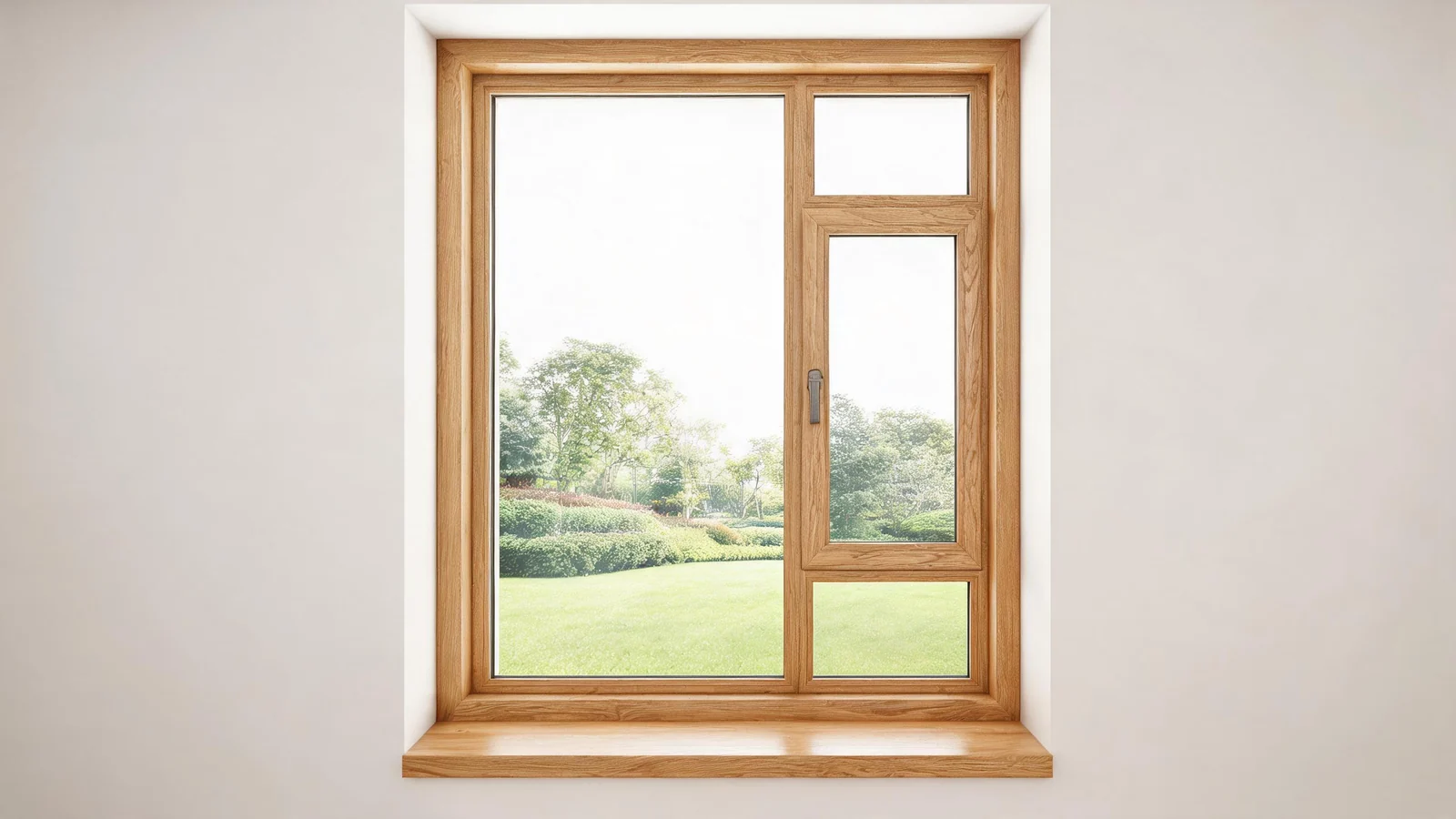
Tilt and turn doors bring European operating logic to entryways, balconies, and large openings. They tilt inward at the top for ventilation and swing inward like a regular door for full access. Because they use the same multi-point locking and hardware systems as tilt and turn windows, they suit projects that need consistent performance across the building envelope. The price of a tilt and turn door depends on material, size, glazing, hardware, and how much customization the project requires.
WANJIA Hiseng manufactures these doors in Foshan, China, with a 20,376 m² (219,325 sq ft) production facility and about 450 employees. The factory runs 15 production lines and supports full customization, drawing-based customization, and sample-based customization. Minimum order quantity is 2 square meters. Quotes are provided within 3 hours on average after receiving project details. Lead time is usually 25-30 business days, depending on the design, materials, and order volume.
What Determines Tilt and Turn Doors Price
Several factors move the final number. Material choice is the largest driver. Aluminum-clad wood doors cost more than all-aluminum doors because they combine a solid wood interior with a weather-resistant aluminum exterior. The wood species and finish affect the price. Standard options include American Oak, Burma Teak, Dark Walnut, Cherry Wood, and Red Rosewood. Aluminum profiles can be powder coated, anodized, or finished with a wood-grain texture. Color choices for aluminum include 9 standard colors, and steel hardware comes in 26 colors.
Size and configuration also matter. Larger door panels need stronger frames and heavier hardware. Custom shapes, such as arched tops or extra-wide openings, add fabrication time. Glazing is another cost factor. Double glazing is the baseline. Triple glazing, Low-E coatings, and gas-filled units improve thermal performance but raise the price. Hardware brands like ROTO, SIEGENIA, and CMECH are available, and the choice affects both function and cost.
Material Options and Their Effect on Price
Aluminum tilt and turn doors use thermally broken profiles. The 91 series aluminum tilt and turn window, for example, uses 6060-T66 aluminum with a 1.8 mm wall thickness and 2.0 mm local reinforcement. The same profile logic extends to door systems. Aluminum doors are lighter than aluminum-clad wood, resist corrosion, and need little maintenance. They cost less than wood-clad versions but more than basic uPVC, which WANJIA Hiseng does not list on this site.
Aluminum-clad wood doors have a solid wood interior and an aluminum exterior. The wood provides natural insulation and a warm look. The aluminum shell protects against rain, UV, and temperature swings. This combination costs more because it uses two materials and requires careful bonding. The exterior aluminum is 6063-T5 alloy. The interior wood can be selected from several species. The result is a door that performs well in coastal or high-humidity environments.
Which Material Fits Your Project
Builders and dealers often choose all-aluminum for commercial or multi-unit projects where cost per opening matters. Homeowners and architects who want a wood interior often choose aluminum-clad wood for entry doors or large balcony doors. Both options accept the same tilt and turn hardware, so the operating feel is identical. The price difference comes from the material stack, not the mechanism.
Glazing and Hardware: Where the Money Goes
Glazing affects both price and performance. Double glazing with a 5+12A+5 or 5+16A+5 configuration is common. Triple glazing, such as 5+16A+5+16A+5, improves insulation and sound control. Low-E coatings reduce heat transfer. Argon or krypton gas fills add cost but improve U-values. The 91 series aluminum tilt and turn window achieves Uw 1.4 W/m²K with triple glazing. Door systems can use similar glass packages, though the exact U-value depends on the door size and configuration.
Hardware is the second major cost center. Multi-point locking systems secure the door at several points around the frame. ROTO, SIEGENIA, and CMECH are the main hardware brands. Each brand has different price points and features. The tilt and turn mechanism itself is a precision assembly. Cheaper hardware may feel loose or wear faster. For doors that open and close many times a day, spending more on hardware is usually worth it.
Optional Features That Add Cost
Built-in blinds, laminated glass, and special coatings all increase the price. Laminated glass improves security and sound control. Built-in blinds sit inside the glass unit and need no cleaning. Wood-grain aluminum finishes cost more than standard powder coating. Custom colors outside the 9 standard aluminum colors may require a minimum order or longer lead time.
Factory Direct Pricing vs. Retail Markup
Buying from WANJIA Hiseng means working with the factory, not a distributor. The factory quotes within 3 hours on average after receiving project details. Pricing is based on the bill of materials, the size of the order, and the level of customization. There is no retail markup, but there are shipping and import costs to consider. The factory ships from Guangzhou port, Foshan port, or Shenzhen port. Trade terms include EXW, FOB, and CIF. Payment is by bank transfer or T/T.
For builders and dealers, factory direct pricing works well when the project has multiple openings. The minimum order quantity is 2 square meters, so even small projects can be quoted. For homeowners, the factory provides installation videos, written guidance, and remote assistance after the goods arrive. The factory's technical team can also help with measurement solutions before production.
How to Get an Accurate Tilt and Turn Doors Price
To get a useful quote, provide the rough opening dimensions, the material preference, the glazing package, and the hardware brand. If the project has multiple doors, list each opening separately. Mention any custom shapes, colors, or finishes. The factory will respond within 3 hours on average. Lead time is usually 25-30 business days, depending on the design, materials, and order volume.
WANJIA Hiseng's window and door products are backed by internationally recognized certifications, supporting projects across North America, Australia and New Zealand, Europe, and beyond. The factory holds ENERGY STAR, NFRC, CSA, CE, ISO 14001, and ISO 45001 certifications for its product lines. For tilt and turn doors specifically, the factory applies the same engineering and quality control as its NFRC and CSA certified window products, but the door itself may not carry a separate certification unless specified in the contract.
Comparing Tilt and Turn Doors to Other Door Types
Tilt and turn doors differ from sliding doors, folding doors, and standard swing doors. Sliding doors save space but do not tilt for ventilation. Folding doors open wide but need more wall space. Tilt and turn doors offer two functions in one unit: a secure tilt position for airflow and a full swing for access. They work well as balcony doors, terrace doors, and large entry doors. The price is usually higher than a basic swing door but lower than a high-end folding door of the same size.
For projects that need a large opening with a tilt function, a tilt and turn door is a practical choice. For very wide openings, a tilt and slide door or a lifting and sliding door may be better. WANJIA Hiseng also manufactures tilt and slide doors and passive house doors. Each type has a different price structure and operating feel.
Common Questions About Tilt and Turn Doors Price
Many buyers ask whether the price includes hardware. Yes, the quote includes the selected hardware brand and finish. Glass is also included. Shipping and import duties are separate. The factory provides a tracking number after shipment. Packing is in wooden boxes and wooden frames to protect the doors during transit.
Another common question is about warranty. The warranty depends on the specific product and contract terms. Repair or replacement is provided during the warranty period. The after-sales service team is reachable directly. For installation, the factory sends installation videos and written guidance after the goods arrive. Remote assistance is available until the project is finished.